Marco Gruteser
Peter D. Cherasia Faculty Scholar and Professor
Chair ACM SIGMOBILE

Peter D. Cherasia Faculty Scholar and Professor
Chair ACM SIGMOBILE

Congratulations to Viet on an Infocom 2016 Best-in-Session Presentation Award.
Our pedestrian safety technology LookUp was featured in the Wall Street Journal.
Released ns3 patches and models for large-scale vehicular network simulations.
I will be co-chairing ACM MobiCom 2016. Please join us in New York.
Congratulations to Cagdas on a UbiComp 2015 Honorable Mention Award. Thanks also to Emiliano Miluzzo and Rich Howard for their help with this work.
Marco Gruteser is a Professor of Electrical and Computer Engineering as well as Computer Science (by courtesy) at Rutgers University's Wireless Information Network Laboratory (WINLAB). He directs research in mobile computing, is a pioneer in the area of location privacy and recognized for his work on connected vehicles.
Beyond these topics, his more than hundred peer-reviewed articles and patents span a wide range of wireless, mobile systems, and pervasive computing issues. He has served as program co-chair or vice-chair for conferences such as ACM MobiSys, ACM WiSec, IEEE VNC and IEEE Percom. He has delivered nine conference and workshop keynotes, served as panel moderator at ACM MobiCom, and as panelist at ACM MobiSys, IEEE Infocom, and IEEE ICC. He was elected treasurer and member of the executive committee of ACM SIGMOBILE.
He received his MS and PhD degrees from the University of Colorado in 2000 and 2004, respectively, and has held research and visiting positions at the IBM T. J. Watson Research Center and Carnegie Mellon University. His recognitions include an NSF CAREER award, a Rutgers Board of Trustees Research Fellowship for Scholarly Excellence, a Rutgers Outstanding Engineering Faculty Award, as well as best paper awards at ACM MobiCom 2012, ACM MobiCom 2011 and ACM MobiSys 2010. His work has been regularly featured in the media, including NPR, the New York Times, Fox News TV, and CNN TV. He is an ACM Distinguished Scientist.
Distinguishing Users with Capacitive Touch
Communication. Tam Vu, Akash Baid, Simon Gao, Marco
Gruteser, Richard Howard, Janne Lindqvist, Predrag
Spasojevic, Jeffrey Walling, Proceedings of ACM
International Conference on Mobile Computing and
Networking (MobiCom) 2012.(pdf) Best Paper
Award
[Demo
Video] [Interdigital
Innovation Challenge Finalist]
[MIT Technology Review]
[Phys.org]
Detecting Driver Phone Use Levering Car Speakers.
Jie Yang, Simon Sidhom, Gayathri Chandrasekharan, Tam
Vu, Hongbo Liu, NicCecan, Yingying Chen, Marco
Gruteser, Richard Martin, Proceedings of ACM
International Conference on Mobile Computing and
Networking (MobiCom) 2011.(pdf) Best Paper
Award
[National Public Radio 1] [National
Public Radio 2]
[Inside Science TV]
[The Wall Street Journal]
[MIT Technology Review]
[CNet News]
[Yahoo News]
[the Tonight Show with Jay Leno(video)] [Sohu]
[Sina] [CSDN]
Security and Privacy Vulnerabilities of In-Car
Wireless Networks: A Tire-Pressure Monitoring System
Case Study. Ishtiaq Rouf, Rob Miller, Hossen Mustafa,
Travis Taylor, Sangho Oh, Wenyuan Xu, Marco Gruteser,
Wade Trappe, Ivan Seskar. USENIX Security 2010. [AR:
15%] (pdf)
[Usenix Security Talk]
[CNN Transcript]
[MIT Technology Review] [Schneier
Post] [Tyrepress]
ParkNet: Drive-by Sensing of Road-side Parking
Statistics. Suhas Mathur, Tong Jin, Nikhil
Kasturirangan, Janani Chandrasekharan, Wenzhi Xue,
Marco Gruteser, Wade Trappe. ACM MobiSys 2010. [AR:
20%] (pdf)
Best Paper Award
[MIT Technology Review]
[CBC]
[NJ.com]
Anonymous Usage of Location-Based Services through Spatial and Temporal Cloaking. Marco Gruteser and Dirk Grunwald. MobiSys 2003. [AR 15%] (pdf)
Minitha Jawahar, Marco Gruteser, Richard Howard. "Kicking Yourself Awake: Towards self-powering mats forroom-level localization and occupancy detection" in Proceedings of the 22nd International Workshop on Mobile Computing Systems and Applications, 2021 (pdf)
Mohamed Ibrahim, Ali Rostami, Bo Yu, Hansi Liu, Minitha Jawahar, Viet Nguyen, Marco Gruteser, Fan Bai, and Richard Howard. "Wi-Go: Accurate and Scalable Vehicle Positioning using WiFi Fine Timing Measurement" in Proceedings of the 18th ACM International Conference on Mobile Systems, Applications, and Services (MobiSys), 2020. (pdf)
Hansi Liu, M.F. Huang, Y. Chen, X. Fan, T. Wang, M. Gruteser. "New Methods for Non-Destructive Underground Fiber Localization using Distributed Fiber Optic Sensing Technology." In Proceedings of the IEEE Opto-Electronics and Communications Conference (OECC), 2020. (pdf)
Marco Gruteser, "Technical Perspective: Lighting the way to visual privacy", Communications of the ACM, 2020. (pdf)
Peter Kairouz, H. Brendan McMahan, ..., Marco Gruteser, ... (and ~50 co-authors), "Advances and Open Problems in Federated Learning", ArXiv preprint, ArXiv:1912.04977, 2019.(pdf)
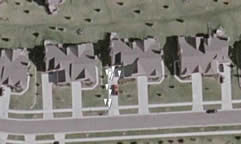
How can we design reliable mobile and vehicular networked systems without compromising the privacy and security of users?
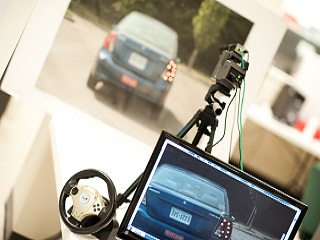
This project explores the use of cameras and optical arrays as communication receiver with applications in interference-limited situations and information sharing among mobile phones.
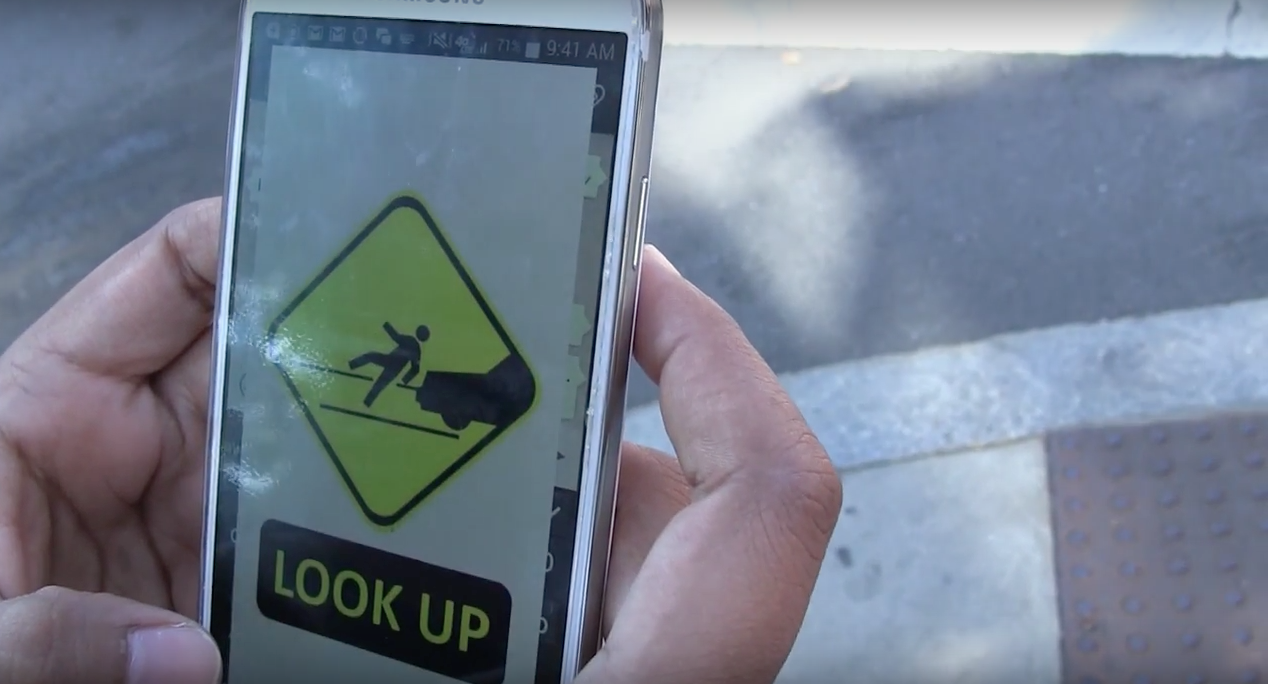
What novel applications can such systems support to improve transportation efficiency and safety?
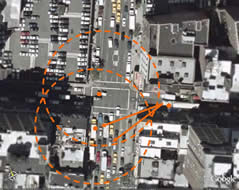
How can we ensure robust vehicle-2-X communication performance in very dense networks?
ns3 Patches and New Models
Spring 2016
14:440:127 Introduction to Computers for Engineers