
Gautam D. Bhanage
(WINLAB Alumni, 2011)
| Home | Research | Publications | Service | Bio |
WINLAB Projects:
1. Wireless Network Virtualization and Optimization
 Network virtualization is a recent offspring from conventional systems
virtualization,
where virtualization aims to provide programability and isolation in
the network stack.
This project involves work in different directions such as determining
suitable platforms
for network virtualization, theoretical formulations for
virtualization, and design and implementation of working platforms with substrates such as WiFi and
WiMAX. Selected papers on wireless Virtualization can be found here.
Further details on our current work on the GENI Open WiMAX basestation can be
found here and here.
Network virtualization is a recent offspring from conventional systems
virtualization,
where virtualization aims to provide programability and isolation in
the network stack.
This project involves work in different directions such as determining
suitable platforms
for network virtualization, theoretical formulations for
virtualization, and design and implementation of working platforms with substrates such as WiFi and
WiMAX. Selected papers on wireless Virtualization can be found here.
Further details on our current work on the GENI Open WiMAX basestation can be
found here and here.
2. MAC aggregation for wireless devices
 In this study we try to understand the impact of MAC aggregation on empirical wireless experimentation as an initial study. Following this we propose, model and evaluate an approach to adaptive MAC aggregation on 802.11 systems.
3. ORBIT Testbed
 This project involved among other things, integrating ORBIT services
for facilitating remote
experimentation, network virtualization to improve testbed utilization,
and developing schemes
for better topology mapping using software approaches. Previous efforts
also included a prototype
for allowing integrated experimentation between the Planetlab (wired)
and ORBIT (wireless)
experimentation consoles. Our work on the ORBIT testbed was also featured
recently among 10 emerging technologies on the
MIT Technology Review.
This project involved among other things, integrating ORBIT services
for facilitating remote
experimentation, network virtualization to improve testbed utilization,
and developing schemes
for better topology mapping using software approaches. Previous efforts
also included a prototype
for allowing integrated experimentation between the Planetlab (wired)
and ORBIT (wireless)
experimentation consoles. Our work on the ORBIT testbed was also featured
recently among 10 emerging technologies on the
MIT Technology Review. 4. RollCall RFID - An active tag platform
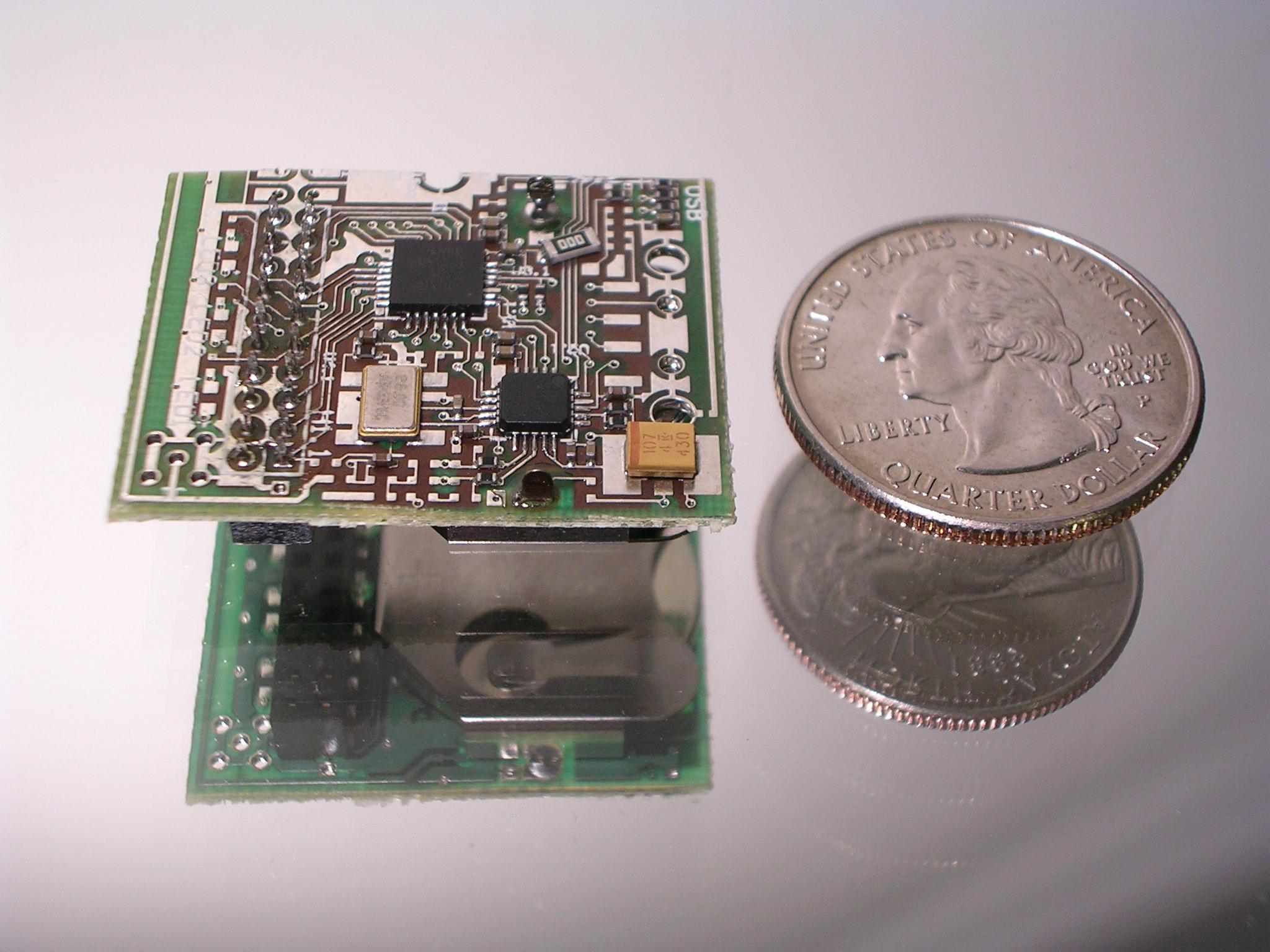 The RollCall Project aims to build a cost effective asset tracking
system by reducing power consumption, thus increasing battery life. The design argues for the
use of active tags
for better monitoring of devices over longer distances, while operating
them in a transmit
only mode. Power lost in idle listening is conserved by eliminating the
receiver entirely
from the tags. More details on this project are available here.
The RollCall Project aims to build a cost effective asset tracking
system by reducing power consumption, thus increasing battery life. The design argues for the
use of active tags
for better monitoring of devices over longer distances, while operating
them in a transmit
only mode. Power lost in idle listening is conserved by eliminating the
receiver entirely
from the tags. More details on this project are available here.
Past and Current Research Collaborators




His pgp key is found here. Key fingerprint = D234 52B2 FF5F F0F6 0104 E51E DF35 B240 B3E1 0BF6